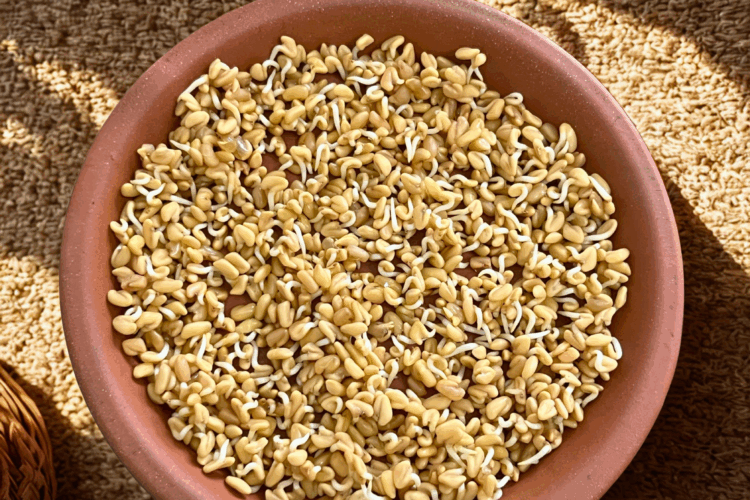
Sprouted methi seeds are nutritious, flavorful, and surprisingly easy to make at home. They have a slightly bitter, refreshing taste and are packed with minerals, antioxidants, and digestive benefits. Whether you add them to salads, stir them into dals, or enjoy them as a simple health snack, sprouted fenugreek seeds are an excellent way to incorporate more plant based nutrition into your meals. This guide takes you through everything you need to know, from soaking to sprouting to storing.
Jump to RecipeMethi seeds have a long history in Indian, Middle Eastern, and Mediterranean cuisines. While they are usually used as a whole spice or dried herb, sprouted methi is a different experience. Sprouting transforms the hard, bitter seed into a softer, more digestible, highly nutritious ingredient. The taste becomes milder, the texture becomes tender, and the nutritional profile becomes richer. The best part is that sprouting requires no special equipment. A bowl, clean water, and a breathable cloth are enough.
Culinary Uses
Sprouted fenugreek is used in many regional dishes and health preparations. In Indian cuisine, sprouted methi is used in salads, stir fried sabzis, dals, and breakfast dishes. It is valued in Ayurvedic cooking for its digestive and detoxifying qualities. Sprouts are popular in modern plant based diets for their high nutrient density. Sprouted methi adds crunch, freshness, and gentle bitterness, which pairs well with simple vegan meals.
Health Benefits
Sprouted fenugreek seeds offer impressive wellness advantages.
- High in fiber that supports digestion
- Good source of iron, magnesium, and B vitamins
- Known for balancing blood sugar levels
- Helps improve metabolism and appetite control
- Contains antioxidants that support immunity
- Traditionally used for hormonal balance and skin health
- Sprouting increases bioavailability and makes the nutrients easier for the body to absorb.
Suggested Uses
Sprouted fenugreek is versatile and works beautifully in clean, plant based cooking.
- Add to salads with lemon, salt, and a pinch of roasted cumin powder
- Mix into cooked moong dal, masoor dal, or vegetable soups
- Pair with steamed vegetables or millet bowls
- Add to breakfast dishes like poha, upma, or vegan omelette mixes
- Stuff into wraps, rolls, and sandwiches
- Add to stir fried vegetables like potatoes, capsicum, beans, or zucchini
- Mix with soaked peanuts, coriander leaves, and a squeeze of lime
- Use in detox drinks or buttermilk alternatives
- The sprouts have a pleasant mild bitterness that brightens simple meals.
Good to Know
- Methi seeds swell a lot during soaking. Always choose a bigger bowl than you think you need.
- Sprouts grow well in indirect light, never in direct sun.
- Always rinse the seeds twice a day to prevent odor or slime.
- If your kitchen is very cold, sprouting may take one extra day.
- If your kitchen is very warm, check the sprouts early because they grow fast.
- Sprouts should have a fresh, mildly grassy smell. If they smell sour or slimy, discard them.
- Only use clean drinking water for sprouting
How to Sprout Methi (Fenugreek) Seeds
Materials
- 2 to 4 tablespoons methi or fenugreek seeds
- A bowl for soaking
- A strainer
- A clean muslin cloth or lid with small air holes
- A plate or sprouting container
Instructions
Rinse the seeds
- Place fenugreek seeds in a bowl and rinse thoroughly to remove dust or debris.
Soak overnight
- Add enough clean water to cover the seeds by at least two inches.
- Let them soak for 8 to 10 hours or overnight.
- The seeds will swell significantly.
Drain completely
- In the morning, drain the water using a strainer. Shake lightly to remove excess water.
Spread out for sprouting
- Transfer the drained seeds to a plate, sprouting container, or any flat vessel.
- Spread them in a thin, even layer.
- Cover with a clean muslin cloth or a lid that allows airflow.
Place in a warm, shaded spot
- Keep the vessel in a warm corner of your kitchen away from direct sunlight.
Rinse twice a day
- Every 12 hours, lightly rinse the seeds with clean water, drain completely, and spread again.
- This prevents dryness and inhibits bacterial growth.
Allow sprouts to grow
- Within 24 to 48 hours, you will see small white sprout tails.
- For longer sprouts, allow one more day.
- Most people prefer short, tender sprouts for the best taste.
Use or store
- Once sprouted, transfer to a container and refrigerate.
- Use within 2 to 3 days for the freshest flavor.
This method is a complete game-changer! If you find raw fenugreek too bitter, sprouting is the “magic trick” that makes them mild, crunchy, and packed with digestive benefits. It’s rare to find a superfood that requires zero equipment and only 5 minutes of effort—this is a must-try for any healthy kitchen.
“Simple, healing, and incredibly versatile. Once you see how easy it is to grow your own nutrients, you’ll never go back!