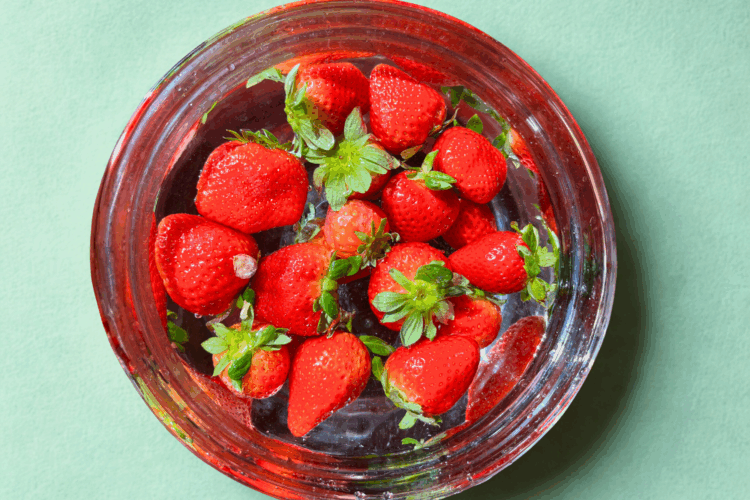
Strawberries are sweet, juicy, and an easy go-to for snacks, smoothies, desserts, and salads. They also pick up dirt, tiny insects, and residues from the field or store. Cleaning strawberries properly removes grime and reduces the chance of unwanted surprises in your fruit bowl. Below is a clear, practical guide that walks you through why cleaning matters, how to store cleaned berries, how to dry them, and a simple, reliable cleaning method you can use at home.
Jump to RecipeFresh strawberries look perfect, but they can hide soil, sand, or small worms, and they may carry pesticide residues. A gentle cleaning routine keeps the berries safe and preserves their flavor. This guide uses common kitchen staples to remove surface contaminants while protecting the delicate texture of the fruit.
Why You Should Clean Strawberries
Cleaning strawberries is essential because they naturally accumulate a variety of debris and contaminants. Since they grow close to the ground, their surfaces often pick up dirt, sand, and tiny soil particles that settle into the seeds and crevices. Rinsing or soaking them also helps remove small insects or larvae that may be present, as these can sometimes hide in the fruit’s textured exterior.
Washing strawberries can further reduce pesticide residues; while it won’t eliminate every chemical applied during cultivation, it does diminish the amount lingering on the surface. Beyond these practical benefits, cleaning the berries improves their overall flavor by removing off-tasting residues and enhances food safety by lowering the risk of bacterial contamination introduced during harvesting, transport, or handling.
Storage
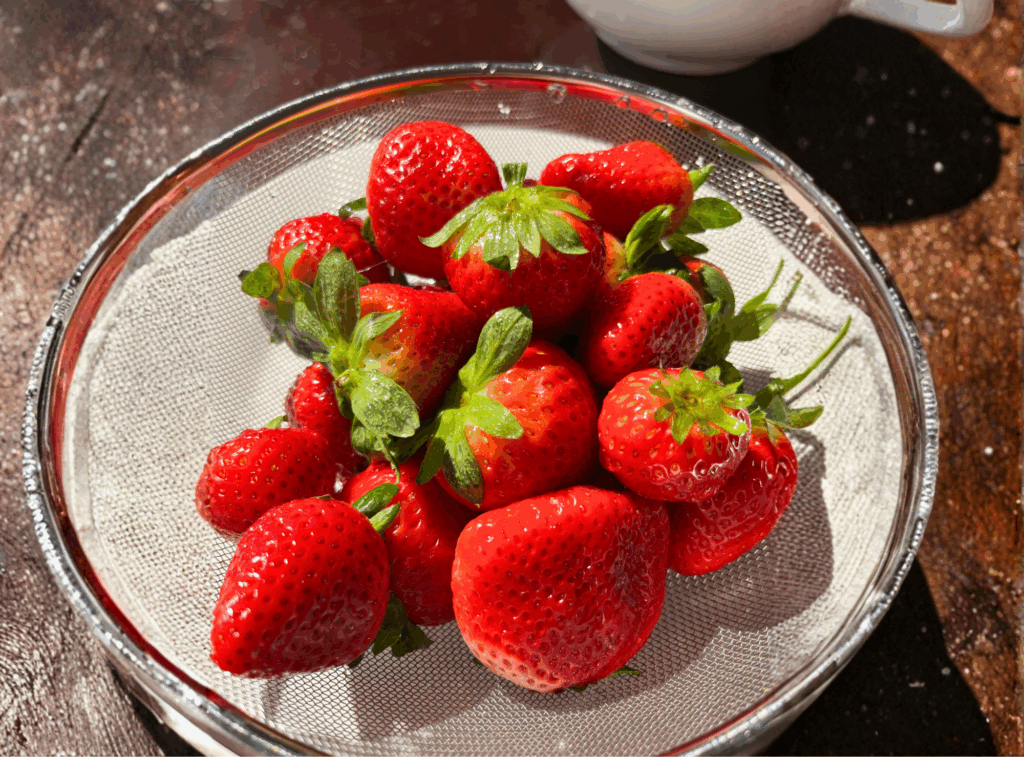
Clean strawberries do not last as long as unwashed berries. It is recommended to remove extra moisture before refrigerating. Store strawberries in a single layer on a paper towel in a shallow, breathable container. If you stack them, use paper towels between layers to absorb moisture. Keep the container in the refrigerator fruit drawer or a cool spot. Use cleaned strawberries within two to three days for best texture and flavor.
Drying
Drying strawberries carefully is important because moisture encourages mold. After washing, let the berries drain in a colander for a minute or two. Then gently pat them dry with a clean kitchen towel or paper towels. For very wet berries, let them air dry on a single layer of paper towels for 10 to 30 minutes, checking occasionally. Only refrigerate them when they are dry to the touch.
Good To Know
- Wash just before eating when possible: Washed berries spoil faster, so if you will not use them within a couple of days, consider waiting to wash them until just before consumption. If you need pre-washed fruit, dry them very well and refrigerate right away.
- Remove stems later: Keep the green caps on during cleaning. Removing stems before washing lets water soak into the berry and makes them soggy. Hull or slice strawberries just before eating.
- Be gentle: Strawberries bruise easily. Handle them gently during washing and drying.
- Use cold water: Warm water can soften berries and speed spoilage.
- Inspect for damage: While drying, look for soft spots or moldy berries and remove them immediately to prevent spread.
- Do not soak too long: Long soaks can make berries mushy. Stick to the recommended 10 to 15 minutes for the baking soda and vinegar solution.
- For bulk berries: Clean in batches to avoid crushing berries at the bottom of a very full bowl.
- Use food-safe vinegar: Regular white vinegar or apple cider vinegar is fine. Do not use cleaning vinegars that are not intended for food.
How To Clean Strawberries
Materials
- Medium to large sized bowl
- Cold tap water
- 1 tbsp baking soda
- 1 tbsp vinegar
- Colander or strainer
- Clean kitchen towel or paper towels
Instructions
Prepare the bowl.
- Choose a bowl that holds all the strawberries in one layer or close to it. Fill the bowl with cold water until the berries are mostly covered.
Add baking soda.
- Sprinkle about one tablespoon of baking soda into the water. Swirl the water gently with your hand or a spoon until the baking soda dissolves. Baking soda helps loosen dirt and can reduce some residues.
Add vinegar.
- Pour one tablespoon of vinegar into the bowl. The mixture may fizz a little. The vinegar helps break down surface grime.
Place the strawberries.
- Add the strawberries gently so they stay whole. Allow them to soak in the solution for 10 to 15 minutes. If you like, stir very gently once or twice to help move water into crevices.
Rinse or soak.
- After 10 to 15 minutes, drain the baking soda and vinegar solution using a colander or carefully lift the berries from the bowl. Rinse the berries under running cold water for a few seconds, or place them in another bowl of plain cold water and let them sit for 5 minutes. Either option helps remove any remaining residue from the cleaning solution.
Drain.
- Let the strawberries sit in the colander and drain for a minute or two.
Dry thoroughly.
- Lay the strawberries on a clean kitchen towel or on several layers of paper towels. Gently pat the tops and bottoms with another towel or paper towel until they feel dry. If berries are still damp, let them air dry for 10 to 30 minutes, checking that they are dry to the touch before storing.
Store.
- Place the dry strawberries in a single layer in a shallow container lined with a paper towel. Close the container loosely or cover it with a lid that allows a little airflow. Refrigerate and use within two to three days
Notes
- Always sort through the berries first and discard any that look moldy or severely bruised.
- If you want to extend freshness, keep a dry paper towel in the storage container to absorb moisture.
- Never soak cut strawberries because they absorb water quickly and turn mushy.
- Do not overcrowd the bowl during washing because packed berries do not clean evenly.
- For organic strawberries, the method remains the same since they can still carry dirt and insects.
I couldn’t believe how much grime was left in the bowl, I wish I’d know this sooner!
Those strawberries look so beautiful. Thank you for the info!!
I never knew you are suppose to put backing soda and vinegar and clean strawberries and do a second wash. I tried this and my strawberries taste so much better and they taste cleaner. You have to try this!