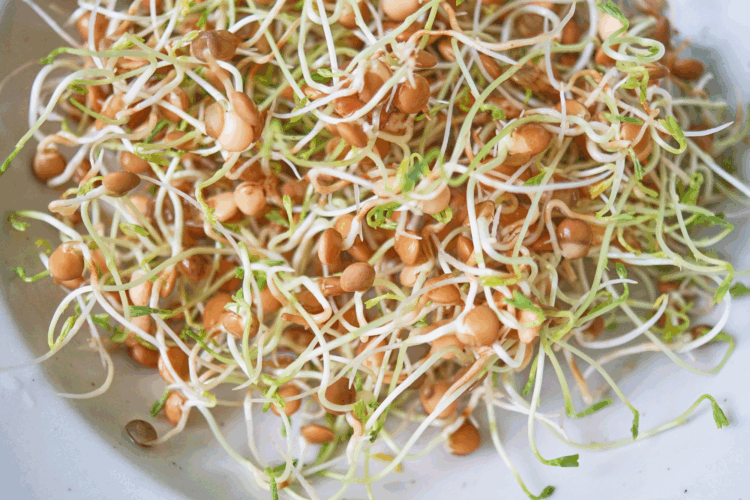
Sprouting brown unpolished lentils is an easy and highly nutritious process that transforms the lentils into a lighter, more digestible form. Sprouted lentils contain higher levels of vitamins, minerals, and enzymes than their unsprouted form. They become slightly sweeter, softer, and easier to cook or eat raw, which makes them ideal for salads, stir fries, wraps, chaats, snacks, and nourishing bowls. Sprouting requires only water, a bowl, and time. No special equipment is needed.
Jump to RecipeBrown lentils sprout more slowly than green moong, but they still respond very well to soaking and regular rinsing. The process takes about one to two days depending on the room temperature. Warmer environments encourage faster sprouting, while cooler rooms slow it down. The steps below guide you through creating clean, healthy sprouts with good texture and flavor.
Why Sprouting Works
Lentils contain natural compounds that stay dormant until they are exposed to moisture. When soaked, the lentils absorb water and begin a gentle activation process that signals the start of germination. This changes their nutritional composition and makes them easier to digest. The sprouting process breaks down complex carbohydrates and increases the availability of nutrients. It also softens the lentils slightly, which prepares them for raw or lightly cooked dishes.
Brown lentils have a firm outer skin that protects the inner seed. Sprouting softens this skin and allows a small white tail to emerge. This tail is the sprout, which carries most of the nutritional benefits of germination. Once the sprout appears, the lentils are ready to eat. If you leave them longer, the sprout grows but the flavor becomes slightly grassy. For most uses, short sprouts of about half a centimeter are ideal.
Nutritional Benefits
Sprouted sabut masoor offers enhanced nutrition compared to unsprouted lentils. The sprouting process activates dormant enzymes in the lentils and breaks down complex carbs and proteins into simpler forms that the body can absorb more easily. As a result, sprouted lentils supply a more accessible form of plant based protein, increased levels of folate and vitamin C, and improved mineral absorption, particularly iron and magnesium.
The sprouting process also reduces compounds that sometimes cause heaviness or digestive discomfort. This makes sprouted lentils especially suitable for light meals, salads, and wellness focused diets. Because the lentils remain raw or lightly cooked, much of their natural nutritional value stays intact. They offer a balance of freshness, crunch, and plant based nourishment, making them a valuable addition to everyday meals.
Safety and Storage Tips
Proper handling helps ensure sprouted lentils remain safe and fresh. Always begin with a thorough rinse and use clean containers during every stage of the process. Lentils should be moist but never left standing in water once the soaking step is completed. Excess water encourages spoilage, so draining fully is one of the most important steps.
Once the lentils have sprouted to your preferred length, store them in an airtight container lined with a dry paper towel to absorb any remaining moisture. Keep the container in the refrigerator and use the sprouts within two to three days. Before adding them to recipes, give them a light rinse. If at any point the sprouts develop an unusual smell, sliminess, or discoloration, discard them. With proper care and hygiene, sprouted sabut masoor remains safe, nutritious, and delicious.
How to Use Sprouted Brown Lentils
Sprouted sabut masoor is extremely versatile. It can be eaten raw in salads, mixed into chaats, added to sandwiches, or used in grain bowls. It can also be lightly sautéed with spices and vegetables for a warm dish. You can use sprouted lentils in soups for extra texture or add them to wraps for crunch and nutrition. Because they are tender and naturally flavourful, they do not require long cooking.
How to Sprout Brown Lentils (Sabut Masoor Dal)
Materials
- A bowl for soaking
- A large sieve or colander for rinsing and draining
- A clean cotton cloth or mesh cover
- An additional bowl or sprouting container for the resting stage
- Fresh drinking water
- An airtight container lined with a paper towel for storage
Instructions
Step 1: Rinse Thoroughly
- Place one cup of sabut masoor in a bowl or sieve.
- Rinse under running water to remove dust or impurities.
- This first rinse is important because lentils will sit in water for many hours. Rinse until the water is clear.
Step 2: Soak the Lentils
- Transfer the rinsed lentils to a large bowl.
- Add four cups of clean water for one cup of lentils.
- Make sure the water level is high because the lentils will expand during soaking.
- Let them soak for eight to twelve hours or overnight.
- During this time, the lentils will swell and become noticeably softer.
Step 3: Drain and Rinse Again
- After soaking, drain the water completely.
- Rinse the lentils under running water once more.
- Drain thoroughly.
- Excess standing water can cause the lentils to spoil, so they should be moist but not submerged.
Step 4: Set Up for Sprouting
- Place the drained lentils in a sieve with a lid
- Alternatively, you can use a container, cover it with a breathable cloth or a lid that is not airtight.
- Airflow is helpful, but the environment should remain humid.
- Keep the lentils in a warm and dark or semi shaded place such as a cupboard or unused corner of the counter.
Step 5: Sprouting
- Within sixteen to twenty-four hours, you will begin to see small white sprouts emerging.
- The exact timing depends on the temperature of your kitchen.
- Keep them hydrated with a few drops of water.
Step 6: Choose Your Sprout Length
- Check your sprouts every four to five hours.
- Longer sprouts are still edible but have a grassy flavour.
- Once the sprouts reach your preferred length, give them one final rinse and drain completely.
Step 7: Store Properly
- Place the sprouted lentils in an airtight container lined with a dry paper towel.
- Refrigerate for two to three days.
- Use them promptly for freshness.
Video
Notes
- Always drain the lentils thoroughly after rinsing. Excess water encourages spoilage.
- Use clean bowls and utensils to avoid contamination.
- Choose fresh sabut masoor rather than very old stock because older lentils sprout slowly.
- If the lentils develop an unpleasant smell, discard them and begin again.
- Keep the sprouting container in a warm spot but avoid direct sunlight.
It’s so much easier than I expected—no special gear needed, just a bit of rinsing. The lentils are way easier to digest and have a delicious, fresh crunch. I’ve been tossing them into every salad and bowl this week. If you’re considering it, definitely give it a go!