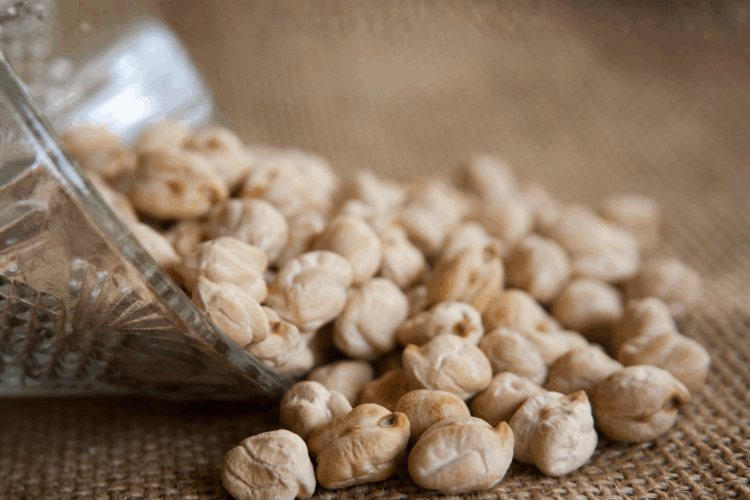
Chickpeas, also called garbanzo beans, are the edible seeds of the Cicer arietinum plant. They are a staple in plant based cooking because of their mild nuttiness, firm yet creamy texture, and ability to adapt to many flavours. Chickpeas are available in two main varieties: the larger beige variety and the smaller darker variety commonly found in India.
Jump to RecipeThey are rich in protein, fibre, iron, and complex carbohydrates. Because of their neutral taste and pleasant bite, chickpeas work well in salads, curries, stews, stir fries, snacks, and blended dishes such as hummus. Chickpea flour and aquafaba expand their uses even further, making them one of the most versatile pantry ingredients in vegan cooking.
Origins and History
Chickpeas have been cultivated for more than seven thousand years, with their earliest use traced to the Middle East and Mediterranean regions. Historical records from ancient Egypt, Greece, and Rome all mention chickpeas as an important food source and a valued crop in dry climates.
Through trade routes, chickpeas spread across Europe, Africa, and Asia. They eventually became a central part of Indian agriculture and cuisine, especially the desi variety. Today, India is the largest producer and consumer of chickpeas. Their long history reflects their resilience, nutritional value, and wide culinary potential.
Taste Profile
Chickpeas have a gentle earthy and nutty flavour that pairs well with spices and herbs. Their taste is subtle, so they easily absorb seasonings from the ingredients they are cooked with. When cooked properly, they become tender and creamy inside while holding their shape.
Kabuli chickpeas are known for their softer texture, which makes them excellent for hummus and blended preparations. Desi chickpeas have a slightly deeper earthy flavour and a firmer bite. Both varieties work well in soups, stews, salads, roasted snacks, and spreads.
How to Store and Use
Dried chickpeas should be kept in an airtight container in a cool and dry place. They remain good for many months, although very old chickpeas take longer to cook. Cooked chickpeas can be refrigerated for three to four days or frozen for two to three months. Canned chickpeas are convenient, but cooking dried chickpeas provides better flavour and texture.
Chickpeas can be used whole in curries, savoury rice dishes, salads, roasted snacks, and stir fries. They can also be blended into dips, soups, patties, and sauces. The cooking liquid, known as aquafaba, can be used in vegan baking and as a natural thickener for dressings and desserts.
How to De-gas Chickpeas
Chickpeas contain natural carbohydrates that can cause gas or bloating. Simple steps can make them easier to digest. Begin by rinsing the dried chickpeas well. Soak them in plenty of water and change the soaking water once or twice. This helps remove some of the compounds responsible for digestive discomfort.
After soaking, drain and rinse thoroughly. While cooking, use fresh water and skim off any foam that collects at the surface of the pot. This foam carries some of the indigestible sugars. Many cooks add a small piece of kombu seaweed during cooking. Kombu helps break down these compounds and does not add any noticeable flavour. Once the chickpeas are cooked, drain the cooking liquid if you want the lightest results.
If you are new to legumes or increasing your intake, introduce chickpeas gradually. The body adapts with time, especially when the beans are soaked, rinsed, and cooked thoroughly.
How To Soak and Cook Chickpeas
Instructions
Step 1: Sorting and Rinsing
- Spread the chickpeas on a tray and remove any stones or damaged beans. Rinse well under running water.
Step 2: Soaking the Chickpeas
Overnight Soak
- This method gives the most even results.
- – Add 1 cup dried chickpeas to a large bowl.
- – Pour in 3 to 4 cups water.
- – Soak for 8 to 12 hours.
- – Drain and rinse before cooking.
Quick Soak
- Use this when short on time.
- – Place 1 cup chickpeas in a pot with 3 to 4 cups water.
- – Bring to a boil for 2 minutes.
- – Turn off the heat, cover, and let sit for 1 hour.
- – Drain and rinse before cooking.
Step 3: Cooking the Chickpeas
Stovetop
- Add soaked chickpeas to a pot and cover with fresh water.
- Bring to a boil and then simmer gently.
- Cook for 45 to 90 minutes depending on the age of the chickpeas.
- Skim any foam that appears on the surface.
- They are done when soft and creamy inside.
Pressure Cooker
- Add soaked chickpeas and enough water to cover.
- Cook for 3 to 4 whistles.
- Let the pressure release naturally.
Instant Pot
- Add soaked chickpeas with enough water to cover.
- Pressure cook on High for 20 to 25 minutes.
- Let the pressure release naturally.
Notes
- You can cook more chickpeas than you need — they freeze beautifully and save time during busy weeks.
- If using aquafaba (the cooking liquid), keep it slightly thick by simmering it down; it works well for vegan baking and whipping.
- For better digestion, always discard soaking water and rinse before cooking.
- Older chickpeas take longer to cook, so adjust time as needed.
- For salads or sautéed dishes, cook until just tender.
- For hummus, chole, soups, or blended dishes, cook until very soft.