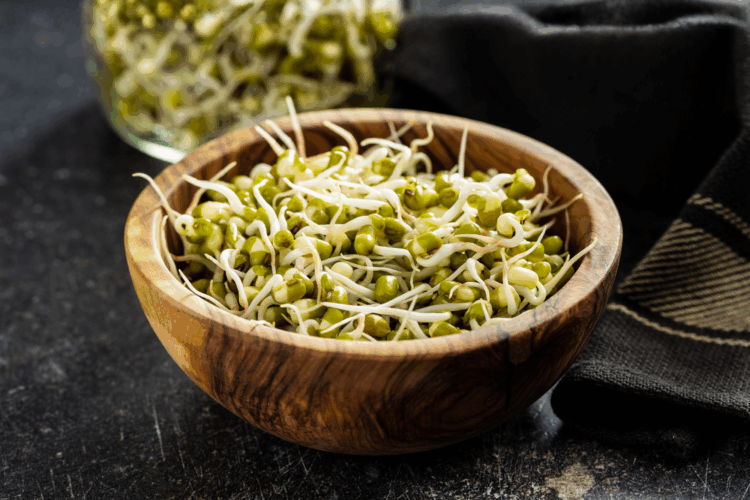
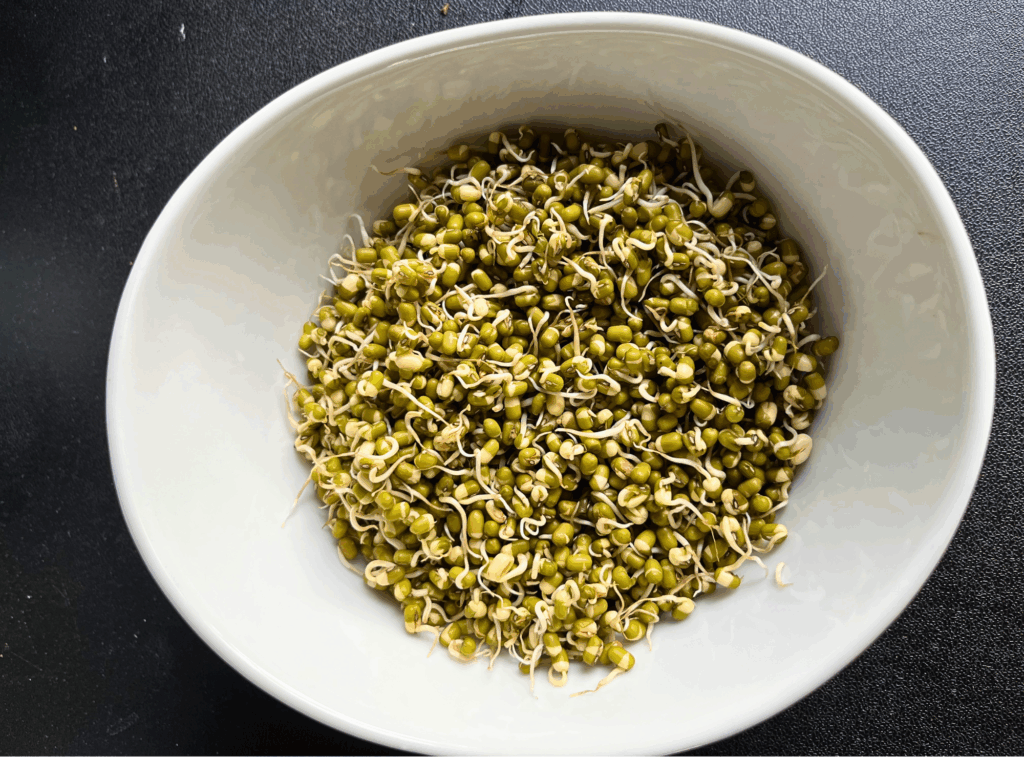
Sprouted mung beans are whole moong beans that have been soaked and allowed to germinate over a short period of time. During sprouting, the beans develop small white shoots, which indicates that the seed has become active and nutritionally richer. Sprouted mung beans are lighter, easier to digest, and slightly sweeter than unsprouted beans. They are commonly used in salads, stir fries, bowls, chaats, and lightly cooked dishes.
Jump to RecipeBecause mung beans sprout easily and quickly, they are one of the most popular legumes for home sprouting. They require minimal equipment and respond well to simple rinsing and draining. The resulting sprouts add freshness, crunch, and plant based nutrition to everyday meals.
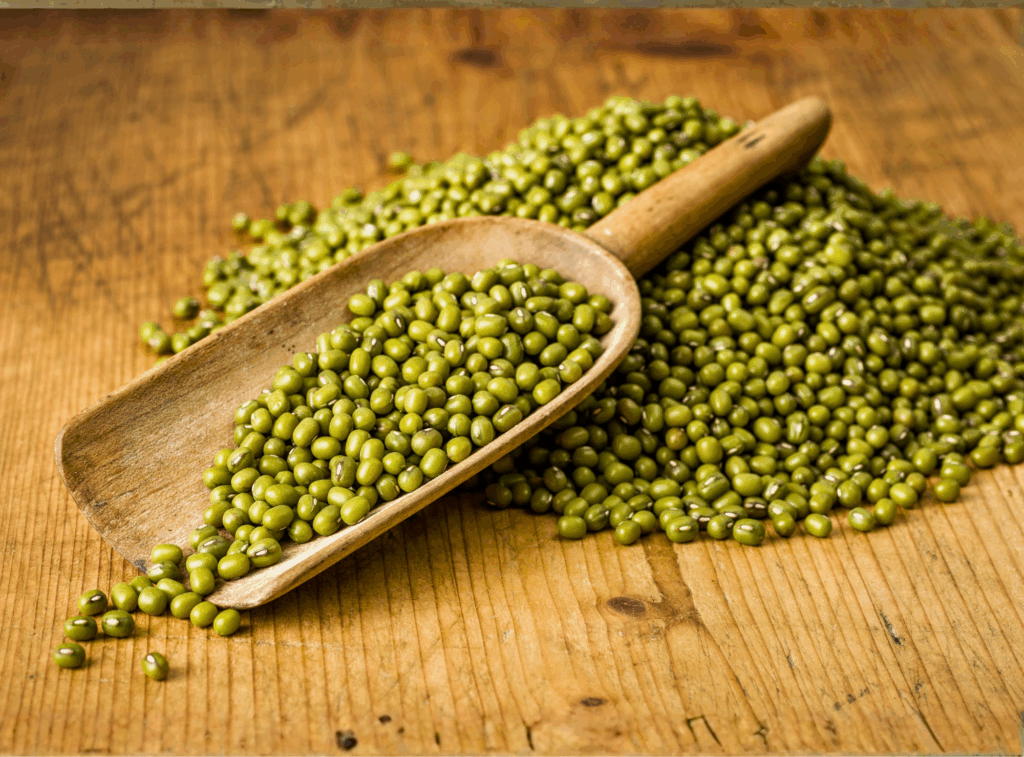
Why Sprout Mung Beans
Sprouting mung beans increases their nutritional value and improves digestibility. The process activates natural enzymes within the beans, which helps break down complex carbohydrates and proteins into simpler forms. This makes sprouted mung beans gentler on the stomach and easier for the body to absorb.
Sprouted mung beans also contain increased levels of certain vitamins and minerals compared to their dried form. They are a good source of plant based protein, fibre, and antioxidants. Because of these qualities, sprouted mung beans are often included in light meals, wellness focused diets, and balanced plant based eating patterns.
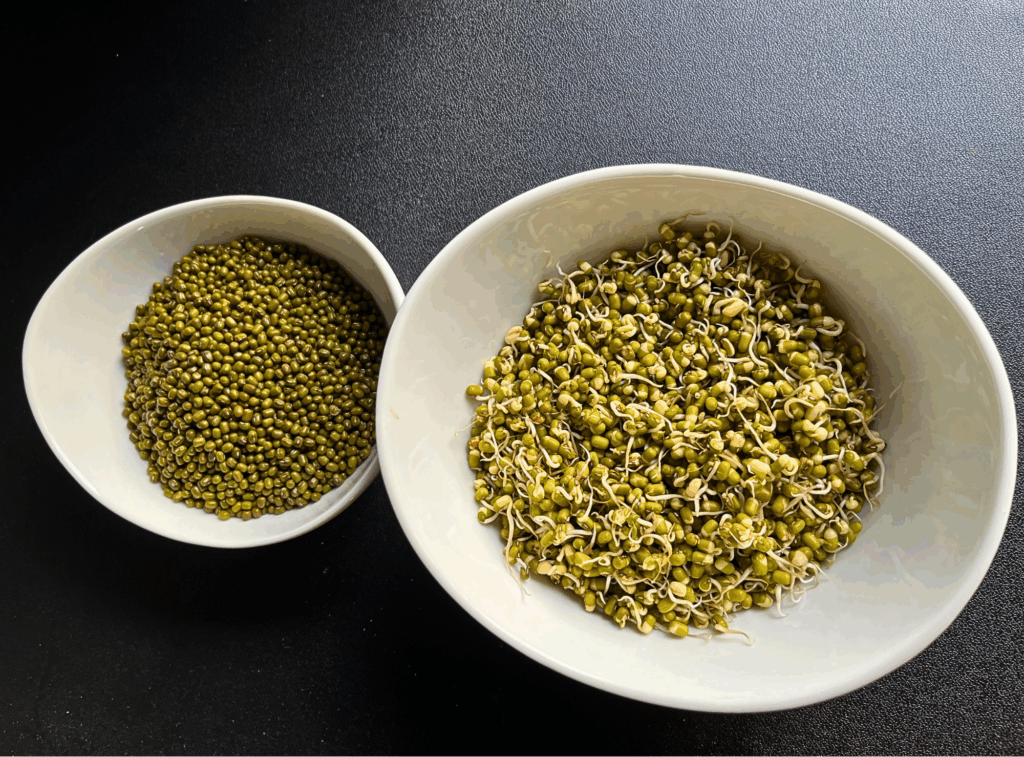
Storage and Uses
Once the mung beans have sprouted, give them a final rinse and air dry them after draining well. Store them in an airtight container lined with a dry paper towel and keep them refrigerated. Sprouted mung beans stay fresh for one week when stored properly, but it is best to consume them within 3-4 days.
Sprouted mung beans can be eaten raw or lightly cooked. They work well in salads, stir fries, wraps, and grain bowls. Light cooking preserves their texture while enhancing flavor. Always discard sprouts that develop an unpleasant smell or slimy texture. When handled with proper hygiene, sprouted mung beans are safe, nutritious, and easy to include in everyday meals.
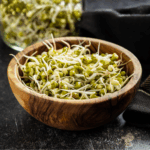
How to Sprout Whole Mung Beans
Materials
- Whole mung beans
- A bowl
- Clean drinking water
- A strainer
- A second bowl to place under the strainer
- A clean cotton kitchen towel
- An airtight container for storage
Instructions
Rinsing the Mung Beans
- Place the mung beans in a bowl and add water.
- Rub the beans gently between your palms to remove surface impurities.
- Drain the water and rinse again.
- Repeat the rinsing process at least twice.
Soaking
- Add fresh water to the rinsed beans.
- For one cup of mung beans, use at least four cups of water.
- Cover the bowl with a lid.
- Keep it in a warm, dark place for eight to ten hours.
Draining After Soaking
- Discard all the soaking water.
- Rinse the beans twice again.
- Transfer the beans to a strainer placed over a bowl.
- Let them drain completely until no water remains.
Setting Up for Sprouting
- Keep the beans in the strainer.
- Cover them with a clean cotton kitchen towel, making sure the towel touches the beans.
- Lightly dampen the towel with a few sprays of water.
- The towel should be moist, not wet.
- Place the setup in a warm, dark place.
First Sprouting Stage
- Leave undisturbed for twelve to fourteen hours.
- The beans will begin to sprout during this time.
Growing the Sprouts Further
- For slightly longer sprouts, dampen the towel again.
- Cover and leave for another twelve to fourteen hours.
- This length is usually ideal and easy to handle.
For Longer Sprouts
- Transfer the sprouts to a clean kitchen towel.
- Wrap loosely to allow airflow.
- Keep in a warm place for another twelve to fifteen hours.
- Good airflow reduces the risk of spoilage.
Final Rinse and Storage
- Rinse the sprouts very lightly before use.
- Check carefully for any signs of mold or spoilage.
- Air dry under shade for one hour before refrigeration.
- Store in an airtight container if needed.
- Sprouts are best consumed fresh.
Video
Notes
- Always use clean bowls, strainers, towels, and hands.
- Never leave beans sitting in standing water after soaking.
- Keep the kitchen towel damp but not wet.
- Ensure airflow by avoiding tight wrapping.
- Rinse lightly before use and ensure sprouts are free of mold.
- Discard immediately if there is any sour smell, sliminess, or visible mold.
Thank you for sharing, I was looking for information on how to prevent mold in sprouts. I will try this method.
Few years ago I had several failed attempts so I had decided to stop trying. But I loved them, my mother used to sprout them for me! This is a fantastic tutorial, I was able to grow them in the first shot. I am writing this while munching on them. Thanks!
This helped me sooooo much my kids loved this recipe it was new to our family. Must try if you haven’t yet!