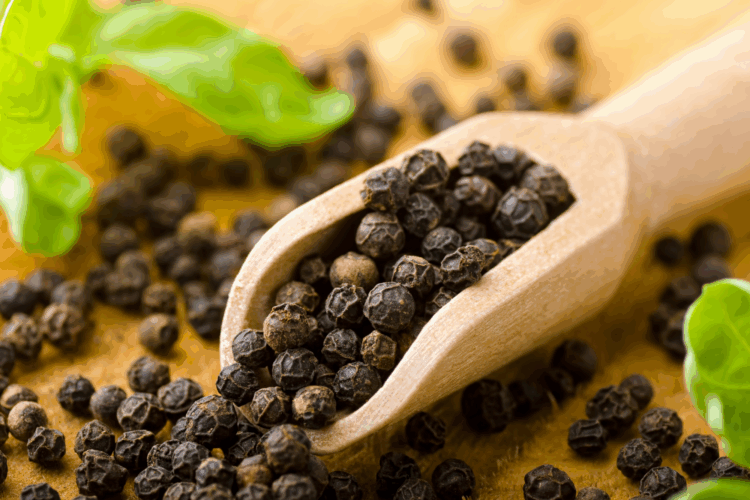
Black pepper comes from the dried berries (peppercorns) of the Piper nigrum vine, a tropical plant native to South India. Often called the “King of Spices,” it is one of the most widely used flavourings in global cuisine. Peppercorns are harvested when still green and unripe, then sun-dried until they turn dark, wrinkled, and intensely aromatic.
Used whole, cracked, or ground, black pepper adds heat, depth, and brightness to a wide range of plant-based dishes. It enhances savory flavors, lifts simple preparations, and is commonly used in everything from stir-fries and dals to salads, stews, and spice blends. Traditionally, pepper has also been valued for its digestive and warming properties.
Origins and History
Black pepper originated in the lush Western Ghats of Kerala, where it has been cultivated for thousands of years. Ancient civilizations prized it so highly that pepper was often used as currency and exchanged through long-distance trade routes linking India with Egypt, Greece, and Rome. Its reputation as a luxury spice made it a symbol of wealth and status.
Pepper’s demand shaped global history — medieval Europe relied heavily on it, which drove exploration and the establishment of maritime trade routes. Portuguese, Dutch, and later other colonial powers sought control over pepper-growing regions, embedding the spice deeply into global trade patterns.
Today, black pepper is grown in tropical regions worldwide, with major producers including India, Vietnam, Indonesia, and Brazil. Its long journey from ancient forests to modern kitchens reflects its universal appeal and culinary importance.
Taste Profile
Black pepper delivers a sharp, warming heat balanced with woody, citrusy, and subtly floral notes. The flavour is bold but versatile, offering a lively kick that enhances savoury, tangy, and even certain sweet dishes. A whole peppercorn bursts with bright, aromatic sharpness, followed by a lingering warmth.
Different forms offer distinct experiences: freshly cracked pepper is vibrant and aromatic; ground pepper is softer and more uniform; and whole peppercorns release their flavor gradually into simmered dishes like soups, lentils, broths, and stews. Pepper’s heat is warming rather than fiery, allowing it to layer smoothly with spices such as cumin, coriander, fennel, turmeric, and chili peppers.
How to Store and Use
Store whole peppercorns in an airtight container, away from sunlight and moisture. Whole pepper stays aromatic for a year or more, while pre-ground pepper loses potency quickly as its essential oils evaporate. For the freshest flavour, grind pepper just before adding it to a dish.
Black pepper works beautifully in vegan cooking: sprinkle freshly cracked pepper over salads, vegetables, tofu scrambles, stir-fries, and roasted dishes; add whole peppercorns to simmering dals, gravies, sauces, and pickles; or incorporate ground pepper into spice blends and marinades. Lightly toasting peppercorns before grinding can deepen their aroma and warmth.
Its versatility makes pepper an essential element in classic plant-based blends such as garam masala, sambar powder, rasam powder, and various global seasoning mixes. Even simple dishes benefit from its brightness and structure.
Good to Know
Freshly ground pepper is far more aromatic than pre-ground, thanks to the essential oils released at the moment of crushing. Tellicherry peppercorns — larger, more mature berries from Kerala — are especially prized for their rich, complex flavor. Pepper harmonizes effortlessly with most spices, making it a key unifying note in many masalas. It also has a long traditional use in herbal preparations for warmth and digestion. Whether sprinkled over a salad or infused into a slow-simmered vegan stew, black pepper adds instant depth and vibrancy.