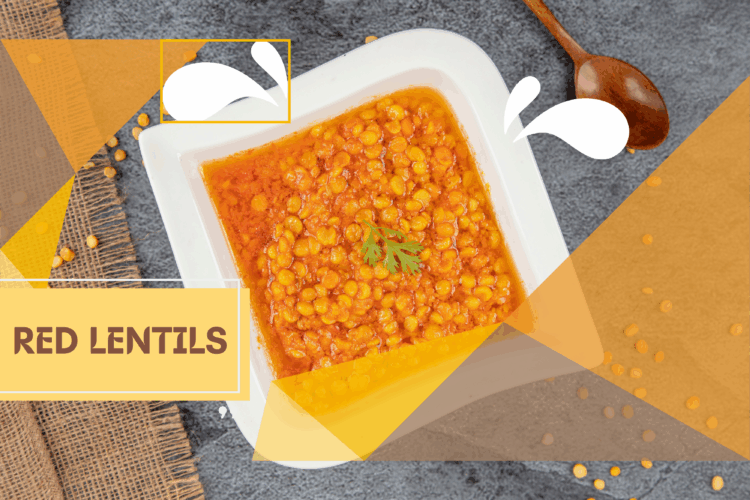
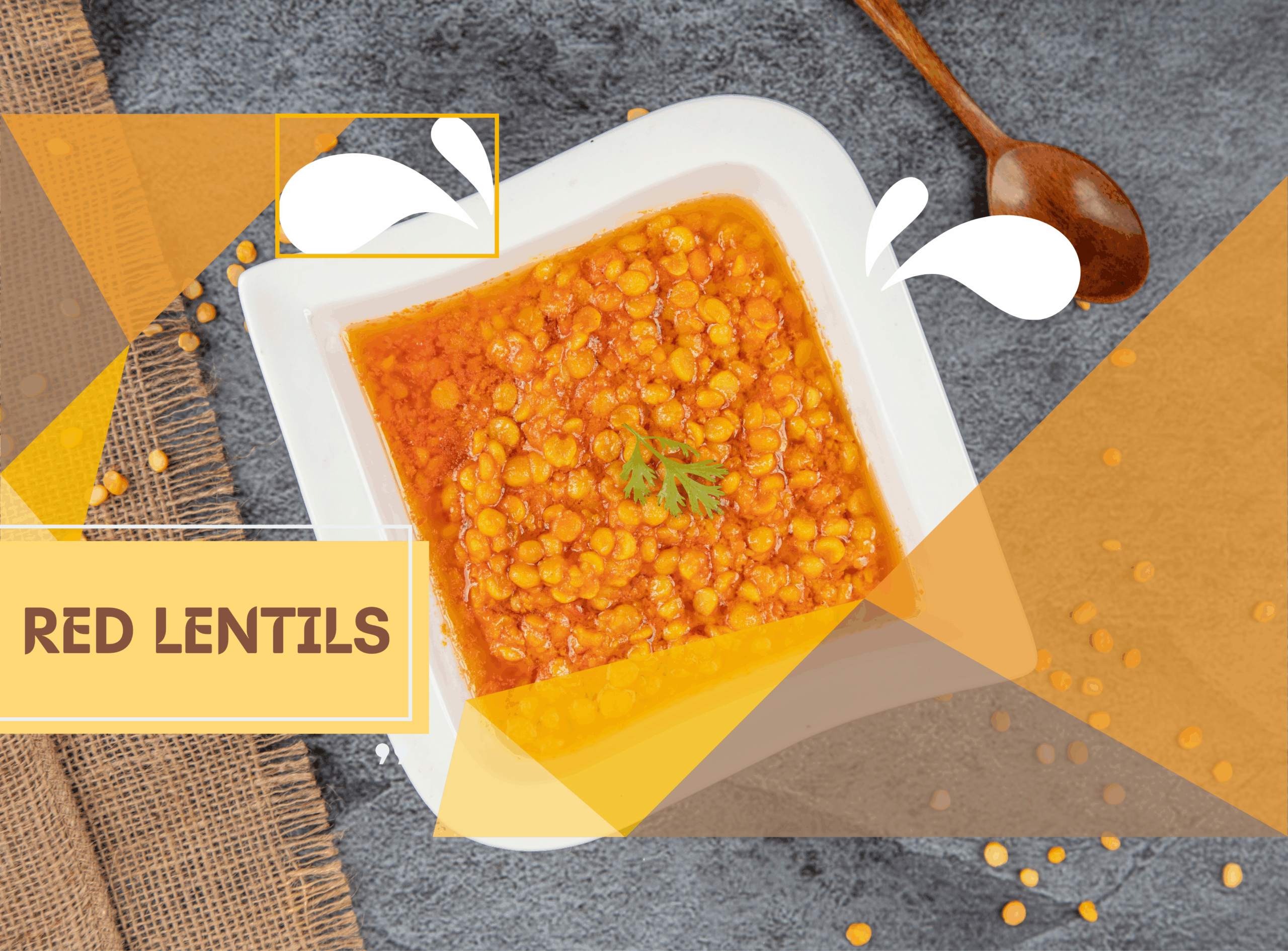
Red lentils, also known as split red masoor, are the hulled and split version of whole masoor. Once the brown outer skin is removed, the inner lentil reveals its distinct orange or salmon color. Because they are split and without their protective skin, red lentils cook very quickly and break down easily to form a creamy texture. This makes them one of the most convenient and widely used lentils in both everyday Indian cooking and global plant based cuisine.
Jump to RecipeNutritionally, red lentils are rich in plant based protein, dietary fibre, folate, potassium, and iron. They are easy to digest compared to many other pulses and require no soaking. Their ability to soften within minutes makes them ideal for busy kitchens and for dishes that require natural thickness or creaminess without added fats. In vegan cooking, red lentils are especially valued for their ability to create smooth, satisfying dishes with minimal effort.
Origins and History
Red lentils have a long and well documented history that stretches back to some of the earliest agricultural societies. Archaeological findings show that lentils were cultivated in the Near East more than eight thousand years ago. They were one of the first legumes to be domesticated, largely because they grew well even in poor soil and dry climates. Lentils were an important source of protein for ancient communities who relied on plants for most of their nutrition.
As trade expanded, lentils spread into the Mediterranean, Central Asia, and the Indian subcontinent. In India, the masoor plant thrived and became deeply integrated into regional cooking traditions. Split red lentils, in particular, became a household staple because of their quick cooking time and versatility. They were easy to prepare on wood fired stoves and did not require long simmering like some other whole dals. Today, red lentils remain an essential crop in India, Turkey, Canada, and Nepal, and continue to be a foundational ingredient in home style meals across cultures.
Taste Profile
Red lentils have a gentle, earthy flavour that becomes soft and mellow as they cook. Their taste is milder than whole lentils because the skin, which adds depth and texture, has been removed. The flavour of red lentils is often described as warm, slightly sweet, and comforting. When simmered, the lentils break down into a smooth, velvety consistency that blends well with spices, herbs, and vegetables.
Because their flavour is light, red lentils adapt easily to many different styles of cooking. They pair beautifully with warming spices such as cumin, coriander, turmeric, paprika, and black pepper. They also work well with tomatoes, coconut milk, ginger, chillies, and fresh herbs. Their neutral taste allows them to carry both simple flavourings, like salt and turmeric, and more complex seasoning blends, making them suitable for both everyday meals and rich festive dishes.
The final texture of red lentils depends on how long they are cooked. A short simmer results in soft grains that are lightly textured, while longer simmering produces a thick, creamy base that can be used for soups, curries, and blended sauces.
How to Store and Use
Red lentils should be stored in an airtight container in a cool, dry place. They have a long shelf life and usually cook evenly even after months in storage. Since they contain no oil, they do not go rancid easily, but it is still best to protect them from moisture. After cooking, red lentils can be refrigerated for three to four days or frozen for up to two months. They reheat well and often taste even better the next day as the flavours settle.
Red lentils are extremely versatile in plant based cooking. They are used to prepare traditional dals, comforting soups, thick curries, stews, blended dips, and coconut based dishes. Their ability to dissolve creates natural creaminess, so they can replace heavy dairy or coconut milk in certain recipes. They also serve as a nutritious base for one pot meals, vegetable stews, and wholesome bowl style dishes. Red lentils combine well with rice, roti, vegetables, and grain based salads, which makes them a reliable and nourishing everyday ingredient.
How To Cook Red Lentils
Instructions
Step 1: Rinse Thoroughly
- Red lentils should always be rinsed under running water to remove any fine dust or starch. Rinse until the water turns mostly clear. The lentils can be soaked for 30 minutes before preparation.
Step 2: Add Water
- The amount of water you use depends on your preferred texture.
- For a thicker dal, use one cup red lentils with two and a half cups water.
- For a thinner, soup like consistency, use three to three and a half cups water.
Step 3: Simmer Gently
- Place the lentils and water in a pot and bring it to a boil. Once boiling, reduce the heat and let the lentils simmer gently. Stir occasionally to prevent sticking. Red lentils usually soften within twelve to eighteen minutes. The lentils will gradually dissolve into a smooth, creamy mixture.
Step 4: Add Seasoning
- Salt can be added once the lentils begin to soften. You can also add turmeric at the beginning for color and warmth. After cooking, finish the lentils with your preferred tempering, spices, herbs, coconut milk, tomatoes, or a squeeze of lemon.
Notes
- If you prefer a lightly textured dal, stop cooking when the lentils still hold a tiny bit of shape.
- For a classic creamy red lentil dal, continue simmering until the lentils fully dissolve.
- For blended soups, sauces, or smooth curries, cook a few extra minutes until completely soft and velvety.