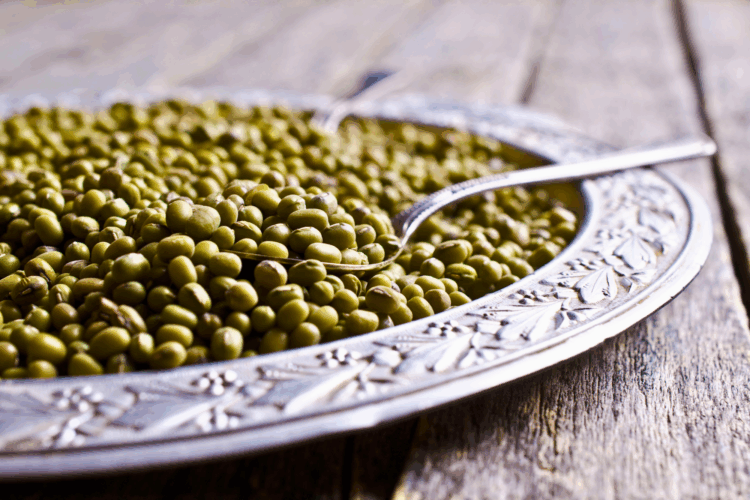
Whole mung beans, also called sabut moong, are small green legumes with a natural outer skin that affects how they cook. Unlike split dals, whole mung beans take longer to soften and benefit from a little preparation before they go on the stove. Their size and skin allow them to stay intact during cooking, which is why they are often used when a dish needs body and texture rather than creaminess.
Before cooking, mung beans are usually rinsed to remove dust and then soaked to help them hydrate evenly. This step allows the beans to cook from the inside out and prevents the center from staying hard while the outside softens. Proper preparation also makes the beans easier to digest and improves their final texture.
Good To Know
As mung beans cook, they slowly absorb water and swell in size. Early in the cooking process, they remain firm and slightly dense. With continued gentle heat, the interior becomes tender while the skin stays intact. When fully cooked, the beans should feel soft when pressed between your fingers but still hold their shape.
Mung beans do not break down easily, which makes them suitable for dishes that require structure. Longer cooking times produce softer beans for comforting meals, while shorter cooking keeps them firm enough for salads and mixed dishes. Because they absorb seasoning gradually, mung beans develop deeper flavour when allowed to simmer gently rather than being rushed.
Culinary Uses
Once cooked, mung beans can be used in a wide range of preparations. Their mild, neutral taste allows them to take on the flavor of spices, herbs, and vegetables without dominating the dish. They work well in simple home-style meals as well as more layered preparations.
Cooked mung beans can be stored and reused easily, making them practical for meal planning. Their texture holds up well after reheating, and their flavor often improves as they rest. Because they are nourishing, filling, and relatively light, mung beans are a dependable ingredient for regular plant-based meals.
How To Cook Mung Beans
Materials
- 1 cup whole moong mung beans
- 3 to 4 cups water
- Salt to taste
Instructions
- Rinse the whole moong thoroughly under running water. Pick through the beans and remove any stones or damaged beans.
- Soak the moong in enough water for 6 to 8 hours or overnight. Soaking helps the beans cook evenly and become softer. After soaking, drain the water and rinse the beans again.
- Add the soaked moong to a pot and pour in 3 to 4 cups of fresh water. The beans should be fully submerged with extra water for expansion.
- Place the pot on medium heat and bring the water to a boil. Once it begins boiling, reduce the heat to low and let the moong simmer. Cook uncovered or partially covered for 35 to 45 minutes, stirring occasionally and adding more water if needed.
- The moong is done when the beans are tender and cooked through but still hold their shape. Add salt once the beans have softened, then simmer for a few more minutes.
- Turn off the heat and drain any excess water if required. Use the cooked whole moong immediately or let it cool and store for later use.
This tastes amazing! It is also so quick to make my family loved this recipe.