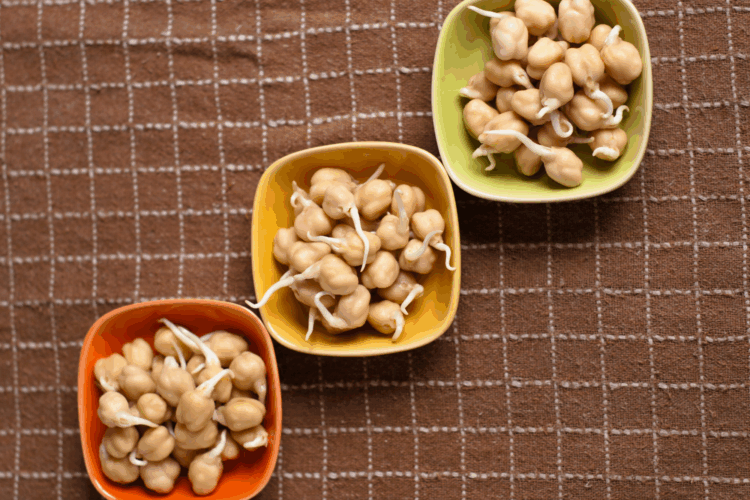
Sprouted chickpeas are one of the easiest and most rewarding foods you can prepare at home. They turn a simple pantry staple into a fresh, nutrient rich ingredient that works beautifully in vegan and no onion no garlic cooking. When chickpeas are soaked and sprouted, they become softer, easier to digest, and far more versatile. You can add them to salads, Buddha bowls, stir fries, chutneys, or eat them plain with a squeeze of lemon. This guide walks you through everything you need to know about sprouting chickpeas with confidence.
Jump to RecipeHealth Benefits
- Sprouted chickpeas come with a boost of nutrition and improved digestibility.
- Sprouting increases the availability of vitamins like vitamin C and several B vitamins.
- The process reduces phytic acid which helps your body absorb minerals better.
- Many people find sprouted chickpeas easier on the stomach than boiled chickpeas.
- They are naturally high in plant protein and fiber which makes them excellent for vegan diets.
- Sprouts contain beneficial enzymes that support digestion and overall gut health.
Sprouting Time
Sprouting chickpeas usually takes between 24 and 48 hours after soaking. The soaking period itself lasts 8 to 12 hours. Warmer climates may shorten the sprouting time while cooler kitchens may stretch it slightly
Signs They Are Ready
You will see a small white tail emerging from the chickpea. The sprout can be tiny or as long as the chickpea itself depending on your preference. For most recipes, a short sprout about one third the length of the chickpea is ideal. The chickpeas should smell fresh and earthy, not sour or fermented.
Good to know
- Always wash your hands and equipment before sprouting to avoid contamination.
- Use fresh, good quality chickpeas. Old chickpeas often take longer to sprout or may not sprout at all.
- Do not keep the sprouts in direct sunlight. Indirect light is fine but heat can encourage spoilage.
- Chickpea sprouts are eaten raw in many plant based recipes but if you prefer, you can lightly steam or sauté them for a gentler flavor.
Ways to Use Sprouted Chickpeas
- Sprouted chickpeas can be used in many ways in vegan meals.
- Toss them into salads with fresh vegetables, herbs, lemon juice, and roasted spices.
- Add them to Buddha bowls or grain bowls for extra crunch and protein.
- Make sprouted chickpea hummus by blending them with tahini, lemon, salt, cumin, and olive oil.
- Use them in quick sautés with curry leaves, mustard seeds, turmeric, and coconut for a South Indian inspired snack.
- Add them to vegan wraps or sandwiches for texture.
- Mix them into soups just before serving to keep their crispness.
Storage Guidelines
Once sprouted, chickpeas should be stored in the refrigerator in an airtight box. They stay fresh for about 3 days. For longer storage, you can freeze them. Spread the sprouts on a tray, freeze them individually, then move them to a freezer safe bag. Frozen sprouts can last up to one month and can be added directly to cooked dishes.\
Method 1: Sprouting in a Bowl
Materials
- Medium bowl
- Clean kitchen towel or plate
- Strainer
Instructions
- Rinse one cup of chickpeas thoroughly under running water.
- Place them in a bowl and cover with triple the amount of fresh water.
- Soak for 8 to 12 hours.
- Drain and rinse the chickpeas.
- Place them back in the bowl, cover loosely with a clean towel or plate, and keep in a cool corner.
- Rinse and drain every 8 hours until you see sprouts.
Method 2: Sprouting in a Colander
Materials
- Large colander
- Bowl or tray to catch water
- Clean cloth
Instructions
- Soak chickpeas as described earlier.
- After draining, transfer them to a colander.
- Place the colander over a bowl so that excess water can drip out.
- Cover lightly with a cloth and leave in a cool spot.
- Rinse and drain every 8 hours until sprouted.
Method 3: Sprouting in a Jar
Materials
- Glass jar
- Mesh lid or cloth with a rubber band
Instructions
- Add rinsed chickpeas to a glass jar and fill with water for soaking.
- After soaking, cover the jar with the mesh lid and drain out all water.
- Invert the jar at an angle to allow airflow and drainage.
- Rinse and drain twice a day.
- Sprouts will appear within 24 to 48 hours.
Method 4: Sprouting in a Sprouter Box
Materials
- Two or three tier sprouter box
- Water
Instructions
- Place soaked chickpeas in one layer inside the sprouter tray.
- Pour water over the top tray so it trickles down and drains out.
- Repeat this rinsing process twice or thrice a day.
- Sprouts usually appear quickly due to controlled airflow.
Tips
- Never let the chickpeas sit in stagnant water after the soaking period.
- If your kitchen is very warm, rinse more frequently to avoid sour smells.
- If it is cold, wrap the sprouting bowl loosely with a cloth for gentle warmth.
- Smaller chickpeas sprout faster than large kabuli chickpeas.
- Do not overcrowd your sprouting container. The chickpeas expand and need space.
- If a chickpea looks slimy or smells off, discard it immediately.
I had no idea it was this simple to unlock so much nutrition! 🤯 Sprouting really takes the ‘heaviness’ out of chickpeas and makes them so much easier on the stomach. I tried Method 2 with the colander and had perfect little sprouts in just over 24 hours. If you haven’t tried them in a Buddha bowl with a squeeze of lemon yet, you’re missing out!
I had no idea it was this simple to unlock so much nutrition! 🤯 Sprouting really takes the ‘heaviness’ out of chickpeas and makes them so much easier on the stomach. I tried Method 2 with the colander and had perfect little sprouts in just over one day. If you haven’t tried them in a Buddha bowl with a squeeze of lemon yet, you’re missing out!
I tried the jar method and it worked perfectly! I love how much easier these are to digest compared to regular chickpeas. I added them to a stir-fry with a squeeze of lemon and the crunch was incredible. Such a simple way to level up my vegan meal prep—I’m never going back to just using canned my wife is going to love this it’s a easy way to sprout chickpeas!